The world of virtual reality is revolutionizing the way we experience gaming and entertainment. With VR technology, the boundaries between the physical and virtual worlds are becoming increasingly blurred.
This technological advancement is not only changing how we play games but also how we consume entertainment content. Virtual reality offers immersive experiences that were previously unimaginable, making it a significant player in the future of entertainment.
Key Takeaways
- The integration of VR technology is enhancing gaming experiences.
- Virtual reality is opening new avenues for entertainment.
- The future of gaming and entertainment is becoming increasingly immersive.
- VR is set to revolutionize how we interact with digital content.
- The entertainment industry is adopting VR for more engaging experiences.
The Evolution of Virtual Reality Technology
The evolution of VR technology is a testament to human ingenuity and the relentless pursuit of innovation. From its roots in science fiction to the current state of the art, VR has come a long way.
From Science Fiction to Reality
VR’s journey began in the realm of science fiction, captivating imaginations with the idea of immersive, alternate realities. As technology advanced, these concepts became a reality.
Early VR Concepts and Prototypes
The first VR prototypes were rudimentary, often consisting of cumbersome headsets and limited content. However, they laid the groundwork for future innovations.
The First Commercial VR Systems
The introduction of commercial VR systems marked a significant milestone. These systems, though initially pricey and limited, brought VR to the mainstream.
Key Technological Breakthroughs
Several key technological breakthroughs have driven VR’s evolution. Advances in display technology, tracking systems, and processing power have all played crucial roles.
Display and Tracking Innovations
Improvements in display resolution and tracking technology have significantly enhanced the VR experience. Modern headsets offer high-resolution displays and precise tracking.
Processing Power Advancements
The increase in processing power has enabled smoother, more complex VR experiences. This has been crucial for the development of sophisticated VR applications.
As VR technology continues to evolve, we can expect even more immersive and interactive experiences. The future of VR is bright, with ongoing innovations promising to further transform the landscape.
The Current State of VR in Gaming
The VR gaming industry has witnessed significant growth in recent years, transforming the way we experience digital entertainment. This growth is driven by advancements in VR technology and increasing consumer adoption.
Market Size and Growth
The VR gaming market has seen substantial growth, with projections indicating a continued upward trend. According to recent reports, the global VR gaming market is expected to reach $44.7 billion by 2024, growing at a CAGR of 33.8%.
Major Players in the VR Gaming Space
Several key players dominate the VR gaming landscape, including Oculus (owned by Meta), Sony, and Valve. These companies are driving innovation in VR hardware and software, shaping the future of gaming.
Consumer Adoption Rates
Consumer adoption of VR technology is on the rise, with more gamers embracing VR experiences. Understanding the demographics of VR users is crucial for industry stakeholders.
Demographics of VR Users
VR users are predominantly younger adults, with a significant proportion being male. However, there’s a growing trend towards more diverse demographics as VR becomes more mainstream.
Barriers to Mainstream Adoption
Despite the growth, several barriers hinder mainstream adoption, including high costs, content limitations, and user experience issues.
| Category | 2022 | 2024 (Projected) |
|---|---|---|
| Market Size | $12.5 billion | $44.7 billion |
| Consumer Adoption Rate | 15% | 30% |
| Major Players | Oculus, Sony | Oculus, Sony, Valve |
Leading VR Platforms and Hardware
The VR landscape is dominated by a few key players, with Meta Quest, PlayStation VR, and Valve Index leading the charge. These platforms are not only advancing VR technology but also shaping the future of gaming and entertainment.
Meta Quest and Oculus Technology
Meta Quest, formerly known as Oculus, has been at the forefront of VR innovation. Its standalone VR headsets offer users a cable-free experience, making VR more accessible.
Standalone vs. PC-Connected Experiences
Meta Quest provides standalone VR experiences, eliminating the need for a PC or console. In contrast, PC-connected VR experiences offer more complex and graphically intensive content.
Meta’s Vision for the Metaverse
Meta is working towards creating the metaverse, a shared, immersive and interactive virtual real where users can create their own avatars and environments and engage with other users in real time.
PlayStation VR and Console Integration
PlayStation VR is designed to work seamlessly with the PlayStation 4 and PlayStation 5 consoles, offering an integrated VR experience. It has a strong lineup of exclusive games and is known for its ease of use.
Valve Index and PC VR Gaming
Valve Index is a high-end PC VR headset known for its advanced graphics and immersive experience. It is favored by hardcore gamers looking for detailed VR environments.
| VR Platform | Type | Key Features |
|---|---|---|
| Meta Quest | Standalone | Cable-free, accessible |
| PlayStation VR | Console-integrated | Exclusive games, easy to use |
| Valve Index | PC-connected | Advanced graphics, immersive |
How VR is Transforming Gaming and Entertainment
Virtual reality (VR) is revolutionizing the gaming and entertainment industries by providing immersive experiences like never before. This transformation is not just about enhancing visuals or sound; it’s about creating entirely new ways for users to interact with virtual worlds.
Immersion and Presence in Virtual Worlds
One of the key aspects of VR is its ability to induce a sense of immersion and presence in virtual environments. This is achieved through a combination of high-quality visuals, realistic sound design, and responsive interaction mechanisms.
The Psychology of VR Immersion
The psychology behind VR immersion involves understanding how our brains process the virtual information presented to us. When VR experiences are designed with psychological principles in mind, they can create a more convincing illusion of being in a different environment.
Breaking the Fourth Wall
VR also enables experiences that can metaphorically “break the fourth wall,” allowing users to interact with the virtual environment in ways that feel natural and intuitive. This can include gestures, movements, and even voice commands.
New Gameplay Mechanics and Possibilities
VR introduces new gameplay mechanics that leverage the immersive nature of the technology. Players can physically move around, manipulate objects, and engage in activities that simulate real-world actions.
Physical Movement as Game Control
One of the innovative aspects of VR gaming is the use of physical movement as a game control mechanism. Players can walk, run, or even crouch to navigate through virtual worlds, adding a layer of physicality to the gaming experience.
Spatial Awareness and Environmental Interaction
VR also enhances spatial awareness and environmental interaction. Players can examine objects from different angles, interact with the environment, and solve puzzles that require manipulating virtual objects.
By harnessing these capabilities, VR is not only transforming how we play games but also how we experience entertainment as a whole. The future of VR holds much promise, with ongoing advancements expected to further enhance immersion, interaction, and overall user experience.
Groundbreaking VR Games Changing the Industry
The VR gaming industry is being revolutionized by groundbreaking titles that are pushing the boundaries of immersive entertainment. These innovative games are not only thrilling but also offer new gameplay mechanics and possibilities that were previously unimaginable.
Action and Adventure Titles
Action and adventure VR games have been at the forefront of the industry’s growth, with titles like “Beat Saber” and “Superhot VR” leading the charge. These games offer fast-paced action and immersive experiences that keep players engaged for hours.
Simulation and Sports Experiences
Simulation and sports VR games provide realistic experiences that simulate real-world activities. Games like “VR Golf Club” and “Surviving Mars” offer players the chance to engage in their favorite sports or manage complex simulations in a highly immersive environment.
Social and Multiplayer VR Games
Social and multiplayer VR games are changing the way we interact with others in virtual worlds. Games like “VRChat” and “Rec Room” allow players to hang out, play games, and socialize in a virtual environment.
Virtual Worlds and Hangout Spaces
Virtual worlds and hangout spaces are becoming increasingly popular, with platforms like “VRChat” offering users the ability to create their own avatars and interact with others in a virtual environment.
Competitive Gaming in VR
Competitive gaming in VR is on the rise, with games like “Echo Arena” and “Beat Saber” offering competitive modes that challenge players to improve their skills.
| Game Title | Genre | Platform |
|---|---|---|
| Beat Saber | Action | Oculus |
| VRChat | Social | Oculus, SteamVR |
| Rec Room | Multiplayer | Oculus, PlayStation VR |
VR’s Impact on Traditional Entertainment Media
The rise of VR technology is revolutionizing traditional entertainment media, offering new ways to experience cinema and live events. This shift is not only changing how we consume entertainment but also opening up new avenues for creators to produce innovative content.
Cinema and Interactive Movies
VR cinema and interactive movies are at the forefront of this revolution. With the ability to create immersive, 360-degree experiences, filmmakers can now engage audiences in ways that were previously impossible.
360-Degree Filmmaking Techniques
360-degree filmmaking involves capturing a scene in all directions, allowing viewers to see the environment from multiple angles. This technique requires specialized equipment and editing software but offers a more immersive experience.
Narrative Challenges in VR Storytelling
While VR offers new possibilities for storytelling, it also presents narrative challenges. Directors must consider how the viewer’s perspective affects the story and ensure that the narrative remains engaging from multiple viewpoints.
Virtual Concerts and Live Events
Virtual concerts and live events are another area where VR is making a significant impact. Artists can now perform for global audiences in virtual spaces, offering a unique experience for attendees.
Artist Performances in Virtual Spaces
Virtual reality allows artists to perform in entirely new environments, from virtual stages to interactive worlds. This opens up new creative possibilities for artists and offers fans a fresh way to experience live performances.
Audience Participation and Interaction
One of the key benefits of VR events is the ability for audiences to participate and interact with the performance. This can range from simple interactions like cheering to more complex engagements like influencing the performance itself.
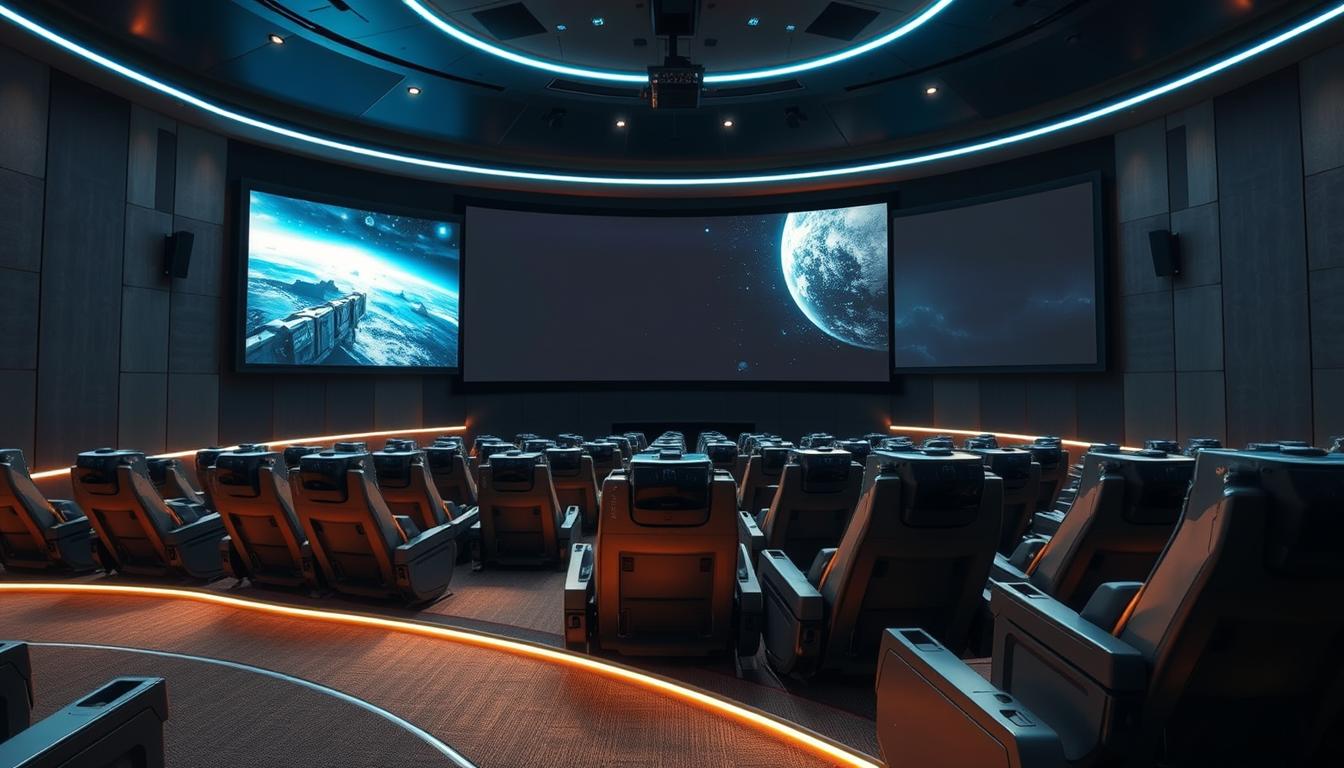
As VR technology continues to evolve, we can expect to see even more innovative applications in traditional entertainment media. The future of entertainment is likely to be shaped by the ongoing development of VR and its ability to create immersive, interactive experiences.
Beyond Gaming: VR in Theme Parks and Location-Based Entertainment
Virtual reality is revolutionizing the entertainment industry beyond gaming, with theme parks and location-based entertainment leading the charge. This innovative technology is being harnessed to create immersive experiences that captivate audiences worldwide.
VR Attractions and Experiences
Theme parks are now incorporating VR into their attractions, offering visitors a new dimension of thrills. VR attractions range from roller coaster experiences to interactive adventures, all designed to push the boundaries of what’s possible. For instance, riders can wear VR headsets while on a roller coaster, synchronizing the visuals with the physical movements to create an intensified experience.
The Fusion of Physical and Virtual Thrills
The true magic happens when physical and virtual elements are combined. This fusion creates an unparalleled level of immersion, making the experience feel incredibly real. Technologies such as motion platforms and environmental effects play a crucial role in this synergy.
Motion Platforms and Environmental Effects
Motion platforms are designed to simulate the sensations of movement, further enhancing the VR experience. When combined with environmental effects like wind, water, or scents, these platforms can simulate a wide range of scenarios, from flying through a storm to exploring an alien planet.
Multi-User Experiences
Another exciting aspect of VR in theme parks is the ability to create multi-user experiences. Visitors can interact with each other within the virtual world, adding a social dimension to the adventure. This feature is particularly appealing as it allows friends and family to share in the excitement together.
Challenges and Limitations of Current VR Technology
Despite the rapid advancements in VR technology, several challenges remain to be addressed. As VR continues to transform gaming and entertainment, understanding these limitations is crucial for future development.
Technical Hurdles
One of the primary challenges facing VR technology is technical hurdles. These include hardware limitations and issues related to motion sickness and comfort.
Hardware Limitations
Current VR hardware faces limitations such as resolution, field of view, and latency. For instance, higher resolution requires more powerful hardware, which can be costly. Advancements in hardware are crucial to improving the overall VR experience.
Motion Sickness and Comfort Issues
Motion sickness remains a significant issue for many VR users. This discomfort can be attributed to the discrepancy between what the body feels and what the eyes see. Improving comfort during extended VR sessions is a key area of research.
Content Creation Challenges
Creating engaging and high-quality VR content is challenging due to the complexity of VR development. Developers must consider factors like user interaction, spatial audio, and intuitive controls.
“The future of VR content lies in its ability to seamlessly integrate interactive elements with immersive storytelling.”
User Experience Issues
User experience is another critical aspect of VR technology. Issues such as physical space requirements and social isolation concerns need to be addressed to enhance user experience.
Physical Space Requirements
Many VR experiences require a significant amount of physical space, which can be a barrier for users with limited room. Developing VR experiences that can adapt to different environments is essential.
Social Isolation Concerns
VR can sometimes lead to social isolation as users become fully immersed in virtual worlds. Balancing VR use with real-world interactions is crucial for maintaining social connections.

The Social Dimension of Virtual Reality
The social dimension of VR is transforming the way we interact, form communities, and understand each other. As VR technology advances, it’s creating new avenues for social interaction that transcend geographical boundaries.
Virtual Communities and Social Platforms
Virtual communities are at the heart of VR’s social dimension. These communities are formed within social platforms designed to facilitate interaction in virtual environments. Users can connect with others who share similar interests, creating a sense of belonging and community.
Avatar-Based Interaction
One of the key features of these virtual communities is avatar-based interaction. Users create digital representations of themselves, known as avatars, which enable them to interact with others in the virtual space. This form of interaction allows for a new level of self-expression and social experimentation.
Building Relationships in Virtual Spaces
Building relationships in VR is becoming increasingly sophisticated. Users can form deep connections with others through shared experiences, collaborative activities, and social events. These relationships can be just as meaningful as those formed in physical spaces.
Identity and Interaction in VR Spaces
The way we interact in VR spaces is influenced by how we present ourselves and perceive others. Identity plays a crucial role in this context, as users can experiment with different aspects of their personality and appearance through their avatars.
Self-Expression Through Avatars
Avatars serve as a medium for self-expression, allowing users to convey their personality, interests, and values. This form of expression can be liberating, enabling users to explore different facets of their identity in a safe and controlled environment.
Social Norms in Virtual Environments
As with any social setting, social norms emerge in virtual environments. These norms govern behavior and interaction within VR communities, influencing how users engage with each other and the consequences of deviating from these norms.
The Future Landscape of VR Entertainment
The future of VR entertainment holds immense promise, with emerging technologies set to transform the industry. As VR continues to evolve, we can expect significant advancements in various areas.
Emerging Technologies and Innovations
Several emerging technologies are poised to revolutionize VR entertainment. These include advancements in haptic feedback and brain-computer interfaces.
Haptic Feedback and Physical Sensation
Haptic feedback technology allows users to feel tactile sensations while in VR, enhancing the sense of immersion. For instance, a user might feel the rumble of a virtual engine or the texture of virtual surfaces.
Brain-Computer Interfaces
Brain-computer interfaces (BCIs) represent a cutting-edge innovation, enabling users to control VR experiences with their thoughts. This technology has the potential to further blur the lines between the physical and virtual worlds.
Predicted Trends for the Next Decade
Looking ahead to the next decade, several trends are expected to shape the VR entertainment landscape. These include mainstream adoption forecasts and the integration with augmented reality.
Mainstream Adoption Forecasts
As VR technology becomes more affordable and user-friendly, it is expected to gain widespread acceptance among consumers. This could lead to a significant increase in VR content creation and consumption.
Integration with Augmented Reality
The integration of VR with augmented reality (AR) is likely to create new, hybrid experiences that blend the best of both worlds. This could open up new possibilities for entertainment, education, and beyond.
| Technology | Impact on VR Entertainment | Timeline |
|---|---|---|
| Haptic Feedback | Enhanced immersion and realism | 2025-2030 |
| Brain-Computer Interfaces | New forms of interaction and control | 2030-2035 |
| VR-AR Integration | Hybrid experiences combining VR and AR | 2028-2032 |
As these technologies continue to evolve, they will undoubtedly shape the future of VR entertainment, offering new and exciting experiences for users around the world.
Conclusion
As we’ve explored throughout this article, Virtual Reality (VR) is revolutionizing the gaming and entertainment industries. From its evolution and current state to its impact on traditional media and beyond, VR is transforming the way we experience entertainment.
The future of VR holds much promise, with emerging technologies and innovations poised to take the industry to new heights. As VR technology continues to advance, we can expect to see even more immersive and interactive experiences that blur the lines between the physical and virtual worlds.
In the realm of gaming, VR is enabling new gameplay mechanics and possibilities, while in entertainment, it’s changing the way we consume media. With major players like Meta Quest, PlayStation VR, and Valve Index leading the charge, the VR gaming space is expected to continue growing.
As VR becomes increasingly mainstream, it’s clear that its impact will be felt across the entertainment industry as a whole. With its potential to create new forms of storytelling and immersive experiences, VR is set to remain a driving force in the world of gaming and entertainment for years to come, shaping the future of VR.
FAQ
What is VR and how does it work?
Virtual reality (VR) is a computer-generated simulation of a three-dimensional environment that can be experienced and interacted with in a seemingly real or physical way. It works by using a combination of hardware and software to create an immersive experience, typically through a headset or other device.
What are the benefits of VR in gaming and entertainment?
VR offers a range of benefits, including increased immersion, new gameplay mechanics, and enhanced social interaction. It also provides new opportunities for entertainment, such as virtual concerts and events, and can be used to create more engaging and interactive experiences.
What are some of the challenges facing VR adoption?
Some of the challenges facing VR adoption include technical hurdles, such as hardware limitations and motion sickness, as well as content creation challenges and user experience issues, such as physical space requirements and social isolation concerns.
How is VR being used beyond gaming?
VR is being used in a range of applications beyond gaming, including education, healthcare, and entertainment. It’s being used to create immersive experiences, such as virtual tours and interactive movies, and is also being used in theme parks and location-based entertainment.
What is the future of VR in entertainment?
The future of VR in entertainment is expected to be shaped by emerging technologies and innovations, such as haptic feedback and brain-computer interfaces. It’s predicted that VR will become increasingly mainstream, with potential integration with augmented reality and other technologies.
What are some of the most popular VR platforms and hardware?
Some of the most popular VR platforms and hardware include Meta Quest, PlayStation VR, and Valve Index. These platforms offer a range of experiences, from gaming to social interaction, and are helping to drive the adoption of VR technology.
How is VR changing the way we experience entertainment?
VR is changing the way we experience entertainment by providing new and immersive ways to engage with content. It’s enabling new forms of storytelling, such as interactive movies and virtual concerts, and is also changing the way we interact with each other, through virtual communities and social platforms.
About the Author




1 thought on “How VR is Transforming Gaming and Entertainment”